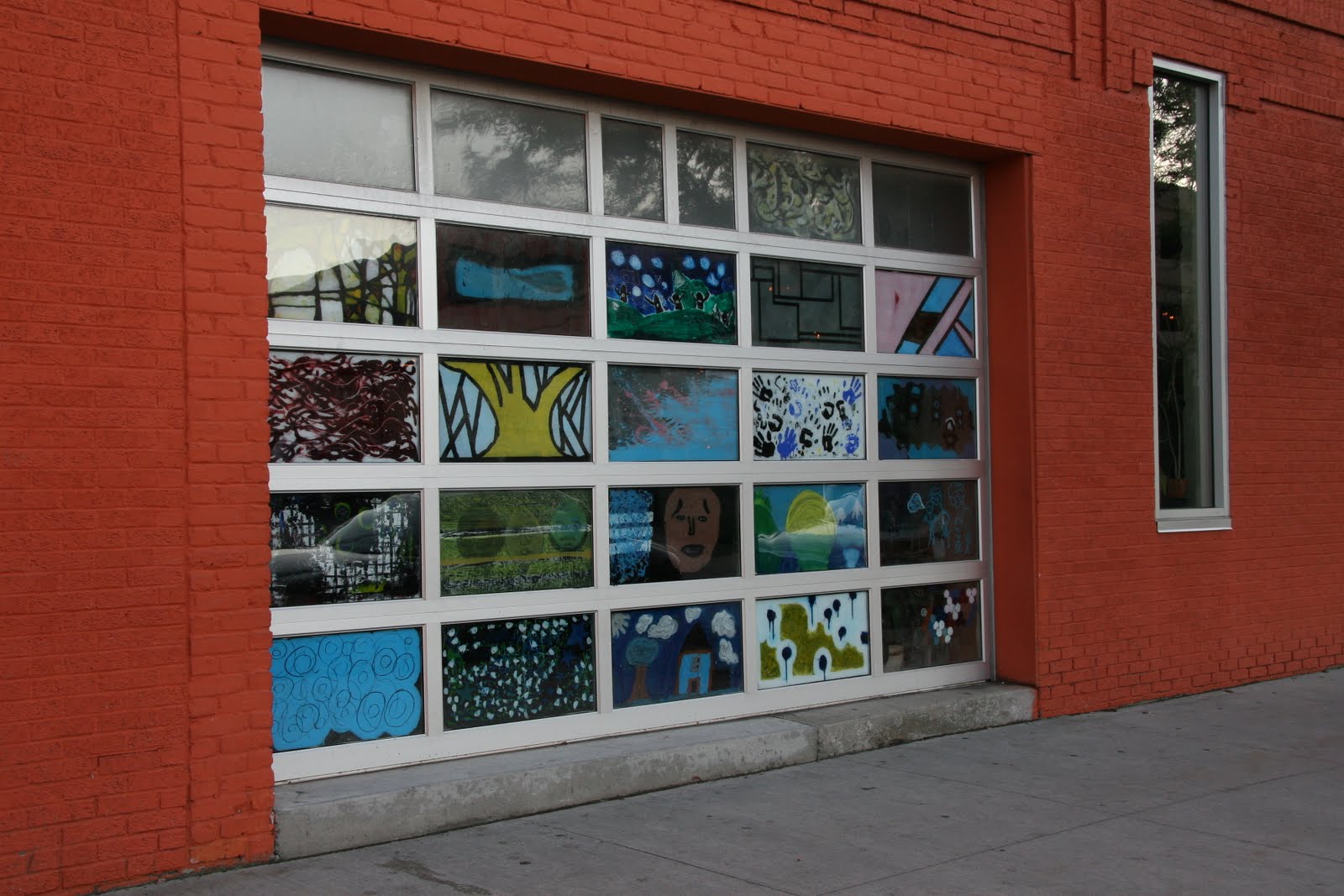
I have finally added my Master's Thesis and my curriculum vitae to this blog. My thesis documents the Roots of Techno conference that I organized at Indiana University in 2006. You'll find my thesis and CV in the upper right corner near the Heidelberg Project image. Enjoy. And, as always, I really want to get your feedback. So let me know thoughts you'd like to share!
And that bike has nothing to do with anything. It's just awesome.
I just recently returned from a fabulous trip to Los Angeles for the Society for Ethnomusicology's annual meeting. Last year was Mexico City, next year is Phili, I'm totally suggesting Detroit to the SEM Board! Seriously. The conference was excellent. There were over 1,000 people registered and in attendance. It's crazy big, even if you've never heard of ethno-what? George Lipsitz gave the Seeger lecture, a major event during which nothing else is scheduled. It was really excellent and inspiring. He's always been an influential person for me, academically. Ever since I was an undergrad at NYU studying with Tricia Roseand reading great essays by Lipsitz, I developed a fondness. To hear him speak eloquently with barely a nod at his notes about Johnny Otis, social justice, and our responsibilities as scholars was so moving. Some of the major themes of the conference were social justice and activism. Those ideas were ever present throughout conference presentations, discussions, and informal conversations.
I picked up some books at the conference that I'm excited about:
I feel a strong responsibility to read anything and everything written about electronic dance music, and other forms of music that involve DJs, especially if there is some form of ethnography involved.
And now for the meat of this post. I'm not a big "tweeter," I get kind of overwhelmed by the overload of jumbled utterances and bit.ly's, ETC. I also get overwhelmed and annoyed by having to make quite an effort to filter the tweets. Anyway, at the Sound Studies special interest group meeting on Thursday at the conference, I volunteered to tweet the conference for friends who couldn't be at the conference as well as for anyone who missed papers that I attended, but were still interested in knowing a bit about them. Twitter doesn't allow for extensive descriptions of academic papers, of course, but my efforts at keeping people informed were fun, for me. I also linked my Twitter account to Facebook so that interested friends on the FB with whom I'm not connected on the TW (?) could join in as well. And it ended up leading to a bit of extended discussion in a few cases. I like that. I included a few SEM tweets about a genre of music known as enka and enka artist, Jero.
Here's what I typed:
#SEM10 So far 2 major uses of Jero at conference that I have seen, although I know there have been more. http://bit.ly/dJvJt
#SEM10 #Jero #enka Super weird cultural aberrations and anomalies that fit your theories with ease; doesn't mean they should.
#SEM10 Blog post brewing about anomalies and academic analysis. Did someone ask about cutting up vinyl? WTF, what a freak.
These three comments will be the organizational themes for the rest of this post. Jero is an African American man from Pittsburg with Japanese ancestry (his maternal grandmother was Japanese). He began singing enka as a child, speaks (and sings) Japanese fluently, and has had a great deal of success singing enka. I knew nothing about enka or Jero before this SEM conference. I was interested in the panel of which the Jero paper was a part because ethnomusicologist Noriko Manabe was presenting on Japanese hip hop. She's a prolific writer and excellent scholar, and I'm always interested in what she has to say. Here's something to listen to and watch:
I admittedly have no idea how relevant this song/video is to enka or Jero, except that it's him singing enka. In accordance with the multiple conference presentations that were based on, or included, Jero (I saw two, but heard about more), the draw is his existence as a cultural anomaly. I'm not trying to label an entire human being as an aberration. However, a young African American man who adorns himself in US hip hop styles, attempts pop dancing and b-boying in his videos, and sings a relatively dated form of Japanese music that is not typically recognized as a genre embraced by youth in Japan, is a cultural abnormality. That said, weirdness breeds academic excitement. The ease with which a scholar could potentially scoop up such anomalies and capitalize on them with a wide range of analytical ideas is tremendous. A scholar could wax theoretic on Jero for weeks! But that ease does not always mean that it works in a broader scheme. Ideally, and I think those readers who were at George Lipsitz's lecture may recall his thoughts on this, we as scholars strive to get ourselves beyond our small, very specific, detailed worlds of ethnographic, cultural, and musical analysis, and make broader, stronger contributions to the world around us. We are not just writing for other scholars!
The conference mentions of Jero came with interesting analyses of identity, blending of cultural norms, genre, and language. There is certainly validity in exploring these kinds of cultural performances - and I mean performance in a very broad sense, performance of identity, of culture, etc., not just getting up on a stage and "performing." But I think that as scholars, we have enough background in ways of writing about and analyzing culture, that we need to interrogate any kind of easy, smooth analysis that is not really informed by local, or indigenous, ways of theorizing culture. Detroiters and Detroit musicians have a vast array of analytical tenets that are very specific, and simultaneously diverse. It would only serve to alienate them from me, and me from them, if I wrote some big analysis that was entirely disconnected from local ways of theorizing culture, music, and history.
This experience at SEM brought me to thinking about a personal experience I had with my own ethnographic research in Detroit on electronic music. I recently posted an inquiry in a number of places (313 email listserv, FB, and DetroitLuv).
Here's the question I asked:
Has anyone ever done or heard of anyone doing the following IN DETROIT:
Physically manipulating a piece of vinyl by cutting it down the middle exactly and then gluing it to another half of vinyl so that the grooves match up and it can actually play? Or any other kind of dramatic vinyl manipulation?
I'm thinking of things beyond concentric grooves, inverse grooves, and locked grooves. I know lots of you already, but just in case you're wondering, I'm writing a dissertation on Detroit techno and house music through Indiana University. I've lived in SE Michigan since early 2008, did research, including lots of interviews, steadily for a year and a half. Still here, still doing interviews ... but I'm mainly writing. Starting chapter 3 tonight!
Feel free to message me directly if you'd rather. Thanks!
My thoughts about this stem from an interview I did in 2006 with a musician named Carrie Gates. I'm working on a few chapters of my dissertation simultaneously and was reading over the paper I wrote for a course, a conference, and an award competition (which was successful), that was based on that interview, among other things. The paper was mildly Detroit related, although I had done zero fieldwork in Detroit by that point, so there was not a whole lot of Detroit related insight. I'm still working with a few of the core theoretical ideas that I introduced in that paper and wondered if vinyl manipulation of this type was something people did or cared about in Detroit.
That DLuv link is to the discussion on that message board, but I also got lots of feedback from 313 list members and on FB. Most of what I got was the following: not really, sort of but no, here's something related but not exactly, and a big old fuck no. I didn't know what to expect in the form of responses when I originally posted the query. I'm really glad I asked in such a public way, because the resulting discussion was really helpful. I'm not going to be writing about vinyl cutting of this kind in my dissertation because it's clearly not a relevant issue here and there are many more way important things to write and think about.
The things I am going to spend a great deal of time on are the concepts of intertextuality and interdiscursivity in the context of performance and production. For the purposes of this blog post, I will define intertextuality, but I'll leave interdiscursivity alone. Just modify what comes next in terms of discourse and more expansive understandings of time.
Intertextuality: the intercommunication of cultural and performative texts.
A text can also be thought of as a unit of communication, or an utterance. I use the concept of text as a way of analyzing performance and production of electronic dance music. Just to reassure you, I'm not using text in a limited verbal sense, and I will explain that in detail in my dissertation. I have developed this approach after endless frustration and disappointment with theories of postmodernism, hybridity, and improvisation; all of which have been used in analyses of electronic dance music for a while now. My thoughts on intertextuality also tie in interperformative relations and the concepts of eclecticism and diversity in Detroit music and culture. Sonic eclecticism and diversity of identity. I know, this is so brief, maybe annoyingly so. But there's more to come, just not necessarily on a blog.
Vinyl cutting was the single most obvious and tangible case for intertextuality in the paper I wrote in 2006. An aberration that fits my theories with ease. Doesn't mean it should! And clearly it won't.
I'm so pleased I knew Aaron-Carl Ragland and got the chance to interview him ... in a Bob Evans in Warren eating up some waffles together! I'll be writing a bit more about him next week when I get back home from this brief weekend trip. In the meantime, check these.
I started the weekend off with a fun night at New Center Park in Detroit. Michael Geiger and Mike Huckaby were playing. It was a free event from 8pm-midnight. I was happy for the early evening since I had big plans for the next day... I'll tell you in a minute. It was cold too, but that didn't bother me much. I danced enough to fog up my glasses a few times. Speaking of dancing, Gehrik Mohr and friends were there dancing some greatness. Gehrik is a fantastic dancer, known all over Detroit as one of the originators of Detroit's freestyle house dancing. A few other dancers who fit this label include Thaddius Reed, Vince Haliburton, Chris Jones, and Tammie Walters. I don't know all Detroit's house dancers. There are some younger dancers that I see around, but I don't know who you are ... so just know that we see you and love you.
The next day, I itched and anxiously awaited 4pm, the magic hour of babysitter arrival and Ma and Pa's departure to Detroit for the We Like Music festival.
And yes, that means I missed Kevin Reynold's live set with a Yamaha and an 808. That is terrible, I felt pain. But 4pm it was. We arrived in time to hear some hot beats from DJ Dez. Dez/Andres is definitely someone I'm excited about. He's been producing and djing for a while now. His Untitled 12 inches on KDJ are incredible and his most recent II on Mahogani Music melts me.
Yeah, that's Minx. Not sure how to type what I think/feel when I hear this. Just breathe and love it. Dez was playing inside at the Old Miami, and I could have easily spent my next 45 minutes there, but Kyle Hall was playing outside and I wanted to check him out too. I definitely wish they had not been scheduled at the same time. But I get it, scheduling can be challenging for a festival. I'm glad I went outside. It turned out to be the best set I've heard Kyle play yet. Lots of fun, excellent transitions and selection, good dancing tunes. And on a side note, I like to watch DJs move as they play. Not, oh yeah I'm hot shit it's a party kind of moving. But just how they feel the music and dance slightly. Kyle has a really distinct head groove. Theo Parrish gets all bouncy. Rick Wilhite gets all spiritual, head to the heavens. Carlos Souffront moves like a soft librarian who will house you. What the hell am I even talking about anymore. Those last three dudes weren't even at the festival. Focus.
On our way out to Cass Cafe for some food, we checked out Madis One who have a new release on Blank Artists. They sounded good and interesting. Experimental instrument usage is always exciting. After a lovely meal (Artichoke pesto melt and Motor City Brew Works Pale Ale), we got back in time almost at the start of James T. Cotton's set. That's Tadd Mullinix. Tadd is a fantastic producer. Please listen to one of the greatest songs ever:
His set was really great. I stood and listened for most of it, partly because I had just had a meal, but also because sometimes it's nice to just listen. I repeatedly had a smile on my face at varying moments of his set. And, although I can't be sure of how much time exactly, I lose track of things when I'm dancing, a little bit, but the last quarter of his set was exquisite. I'll say it again, exquisite. From the super fantastic Italo song through to the end, I was dancing. I woke up thinking about it the next morning. It's really lovely to listen to someone select music that is not simply to get hips bumping, but is also intellectual, educational, inspired by something bigger than tits and beer. I love parties, you know I do. But I also love to be moved. And you know he's drawing from an incredible archive of house records. I've spent some quality time with the "Tadd Recommends" sections at Encore Recordings in Ann Arbor. There's almost always a copy of Vanity 6.
Usually some Mobb Deep in there too. Good thing having Tadd at Encore. Good thing having Encore in SE Michigan.
And finally, nospectacle ended the good music portion of my evening.
Nospectacle, Old Miami, 9/18/10, Photos by James M. Rotz
Nospectacle consists of Walter Wasacz, Jennifer Paul, and Chris McNamara. They were really interesting and fun to watch. It's always great to hear serious noise while the musicians are bouncing around, dancing, fist pumping, and smiling. They weren't going crazy by any means, but they were pleasantly boisterous. Here's a descriptor from their twitter page: hi-fidelity dream-based written word and live performance electronics. There was some interesting video installation going on around them, although I didn't catch who that particular artist was. The festival featured art by a number of artists. The range of sounds was really exciting. The bench we were sitting on was vibrating us. They started their set out with some nebulous droning tones. Oh, and I'll admit right now that my capacity for describing experimental music is limited at this point. But I'll just keep at it, reading and writing, and it will get better. Gradually, they got more regular with rhythms, verging on some electro style sounds at times. My feet were definitely tapping the whole time.
We left Old Miami at about 10:30 intending to get some dessert somewhere and then head over to the Magic Stick thinking that we would catch Jimmy Edgar and Mux Mool. Unfortunately that did not happen. But I didn't know the set times. As it turned out, we missed both. Elliot Lipp was unremarkable, the sound was really quiet, and we didn't stick around for glitch mob kraddy. So we headed home early and I tried to salvage my night by listening to this on the way home, but you can bet it did nothing for James ... too annoying cheese for him. I tortured him anyway.
So you're going to Chicago next weekend for Sonar? You know, that Barcelona festival that is implanting onto Chicago this year. I just saw that Ron Trent is giving a lecture at 4pm Saturday, September 11. And Appleblim is lecturing the day before. So reading about this makes me actually regret not going to the festival. But I've got some Indiana brews that are just waiting anxiously in my basement to be enjoyed by some friends. I'm trying to make up some weirdo "bros before hoes" rhyme but with "brews." ... Brews before Sonar ... nope, not effective ...
And here's another great reason to be in Chicago looking for tunes:
Smart Bar 3730 N. Clark St. Chicago, IL 60613 Ticket info: $5 all night
The festival actually seems more interesting than I originally thought a few weeks ago. The Ron Trent lecture totally seals the deal! You might want to take a look at this article by Terry Matthew about electronic music in Chicago:
I was just in Chicago last weekend and had such a great time, I wanted to share some places with you so that you can go and experience them for yourself.
Coffeeshop #1 Fifteen Stars 110% Excellent !!!!One!!!!: The Wormhole in Wicker Park 1462 N. Milwaukee
Metropolis and Intelligentsia are both good too. I'm becoming an espresso head, so that's why these places are good. Don't worry, just order whatever you want, and if you get lip, give them sass.
If you're looking for records, Chicago is good for that. But if you're reading this, then maybe you already know about Chicago vinyl spots.
We ate at this great restaurant on the south side called Amelia's. It's BYOB and you can swing by the grocery and liquor store right down the block on your way. Yes, it's on the south side. Don't be scared. It's perfectly reasonable to go down around 47th street in Chicago, even if you're a big gleaming whitey like me. Just keep your wits, like you would in ANY part of ANY city, and don't go much further south alone after dark. See, here's me perfectly safe and delighted after a fabulous meal at Amelia's.
And if you need anything else, just consult the Chicago Reader.
2pm-10pm The Old Miami 3930 Cass Avenue Detroit, MI 9pm-2am The Magic Stick 4120 Woodward Avenue Detroit, MI
Music:
Jimmy Edgar Mux Mool Eliot Lipp Kraddy James T. Cotton Madis One John Arnold Kyle Hall Mobil Kevin Reynolds Aether Perilelle Intricate Dialect Leo123 DJ Deadlines Bobby Dolo nospectacle Green Meadows A.M. Architect Kadence Slufter
Visual:
Broken City Lab VJ Kero Linsay Jewell Nivek Monet Detronik
Just spent the evening at YouthVille Detroit, a not-for-profit community center for Detroit youth, ages 11-19. Here's a bit about YouthVille:
YouthVille Detroit is "a youth development center (not just a recreational facility) based on the belief that young people need: • A Safe Space • Responsible, caring adults engaged in their lives • To be intentionally involved in their own development • Broad supports and opportunities Communicating the concept of positive youth development as the mission of YouthVille Detroit was a key initiative. The inclusion of youth parents, teachers, school administrators, business leaders, legislators, and the governor brought commitments and enthusiastic support from various stakeholders in the Detroit community and southeastern Michigan."
Malik Alston & Mike Huckaby after the demo playing around.
Mike Huckaby offers regular courses there in music production. Kyle Hall got his start at YouthVille in Huckaby's class, and eventually started teaching on his own there for a time. Tonight was a demo offered by Mike Huckaby for free (a relatively regular occurrence here in Detroit!) of Maschine by Native Instruments. If you want to know more about Maschine, just click back there. I'm going to tell you about the event. I went because I think it's so great that these types of events happen in Detroit - free, no registration, open to all, just come together and hang out and learn about music production. I'm not a producer, not a DJ, not even a collector...of anything. I'm telling you that so that you'll understand where I'm coming from. I'm a lover of this music, this place, culture, and people. And I write. Mike is clearly devoted to educating people and sharing knowledge. Check out this article by Brendan M. Gillen about him. And this rad LWE podcast. And this Red Bull Music Academy mix. All dope ass hotness. And for the demo, he prepared a file titled "dope ass pattern for demo." It was Dope. Ass.
The room was full when I got there. I was a bit late, had to wait for my man to come home from work. Those kids can't watch theyselves! Anyway, the room was packed with incredible musicians and DJs. Anthony Shake Shakir, Kelli Hand, Eric Johnson, Raymond Jones (DJ Raybone), Rick Wade, Delano Smith, Malik Alston, Mike Grant, Kero of Kero Logistics, and Michael Geiger. Walter Wasacz was in the house as well. And devotees to Detroit, social visionaries Shay Maxwell and Jay Newhouse showed some love. You'll certainly be hearing more about them soon...
Side of YouthVille on Lothrop Road, Detroit.
One of Mike Huckaby's audio files for Maschine was called "dubstep kit" - I really wanted to know what that sounded like!!! Probably awesome. He had a YouthVille student of his on his keyboard assisting with the demo. There was discussion of sampling. Let me just say, when you're an academic, any discussion of sampling always involves some DETAILED, LENGTHY discussion of legal issues. And sure, that's important. But it's damn refreshing to just listen to musicians talk about using sounds. Oh, and Mike described some of his samples as "nonsensical samples" that he would use to turn into something fabulous (my words, not his!). Some of these nonsensical samples had the words "dirty electro" in the title - Dirty Electro! As he flipped through them, I got excited over the dirt. Finally, he described his synthesizer from an unmentioned Dutch company with whom he may customize his own synthesizer...in its own special color. The Huck Synth (again my words, not his...).
It was really lovely to be at YouthVille - my first visit. Detroit is such a great place. Whenever I visit, it's hard for me to leave. I just want to go hang out in all the places I really love. I don't live that far away. Ann Arbor is about 40 minutes away. I just really like a lot of things about Detroit.
I'm a doctoral student in ethnomusicology at Indiana University. I have lived in SE Michigan since 2008 doing field research in Detroit on electronic music. I am currently writing my dissertation on this topic.